Who is a Fleet Manager? Essential Duties & Profit KPI.
Fueling Agile Nigeria ·

Ask any seasoned transport director what separates a profitable yard from a bleeding one, and you will hear the same line: “You cannot manage what you do not measure.” Without hard numbers on litres burned, kilometres covered, and workshop downtime, transport costs rise quietly until margins vanish.
A fleet manager is the operations leader responsible for coordinating commercial vehicles, drivers, fuel spend, preventive maintenance, and statutory compliance through live operational data.
As outlined in the U.S. Bureau of Labor Statistics transportation manager profile, the role connects daily dispatch execution with cost control and road safety. This guide covers daily duties, core KPIs, and required skills.
More control at the pump.More confidence on the road.
Put your fuel budget back in your hands. Set spending limits, track every litre,and keep your drivers moving with one smarter fuel card.
Spend on your terms
Set limits that suit your fleet.
Know where every litre goes
See fuel usage in real time.
Keep your fleet moving
Access over 2,400 stations.
What Does a Fleet Manager Actually Do All Day?
A fleet manager coordinates vehicle maintenance, fuel spend, driver safety, and route schedules so commercial vehicles stay productive and profitable.
Rather than reacting to roadside breakdowns or end-of-month receipt piles, a transport manager balances safety, money, and time across four daily operational priorities.
- Protecting Vehicle Health Through Preventive Servicing. Instead of waiting for a dashboard warning light or an interstate breakdown, a fleet maintenance supervisor tracks odometer mileage and engine hours to book oil, brake, and filter changes early.
According to Deloitte Insights on predictive maintenance, proactive asset monitoring cuts unplanned equipment downtime and lowers repair costs. Knowing early signs when diagnosing vehicle fuel system faults also prevents minor filter clogs from ruining expensive injectors. - Controlling Variable Fuel Spend. Fuel is typically the largest recurring operating expense in commercial transport.
A fleet operations manager monitors pump price differences across states, sets per-vehicle fuel budgets, and audits litres purchased against distance covered so cash advances do not disappear into unverified receipts. - Enforcing Safety and Regulatory Compliance. Commercial vehicles face strict inspection rules, expired-document fines, and road safety risks.
Managers maintain renewal calendars for vehicle licenses, insurance, roadworthiness papers, and speed limiters while coaching drivers on safe speeds and rest breaks, practices aligned with ISO 39001 road traffic safety standards. - Managing Total Cost of Ownership (TCO). Every kilometre driven carries a financial cost. Managers track fuel, servicing, tires, insurance, and vehicle depreciation to spot underperforming assets and recommend the right mileage window to sell and replace aging trucks.
How Does Agile Methodology Improve Fleet Efficiency?
Agile methodology improves fleet efficiency by replacing slow, end-of-month paper audits with short, real-time feedback loops. Instead of waiting weeks to spot fuel theft or route delays, operations teams review live pump and GPS data daily and adjust vehicle limits immediately.
Borrowed from software operations and documented by the Agile Alliance, iterative sprints work well in Nigerian transport where traffic, fuel supply, and route conditions shift daily.
- Short Data Loops Over Monthly Statements. Waiting 30 days to reconcile faded thermal receipts hides fuel leaks until the money is gone. Pairing live fuel monitoring and GPS tracking with real-time pump logs lets supervisors spot route detours or sudden consumption spikes on the same day.
- Nationwide Fueling Flexibility. Restricting drivers to a single filling station brand often causes delays on interstate corridors. Using the Agile Flex Fuel Card, drivers refuel cashlessly across over 2,400 partner stations nationwide in Nigeria while finance teams fund cards within 30 minutes.
- Granular Spending Controls Per Asset. Managers assign daily, weekly, or monthly Naira limits per vehicle and lock cards to specific fuel grades, separating Automotive Gas Oil (AGO) diesel trucks from Premium Motor Spirit (PMS) petrol pool cars.
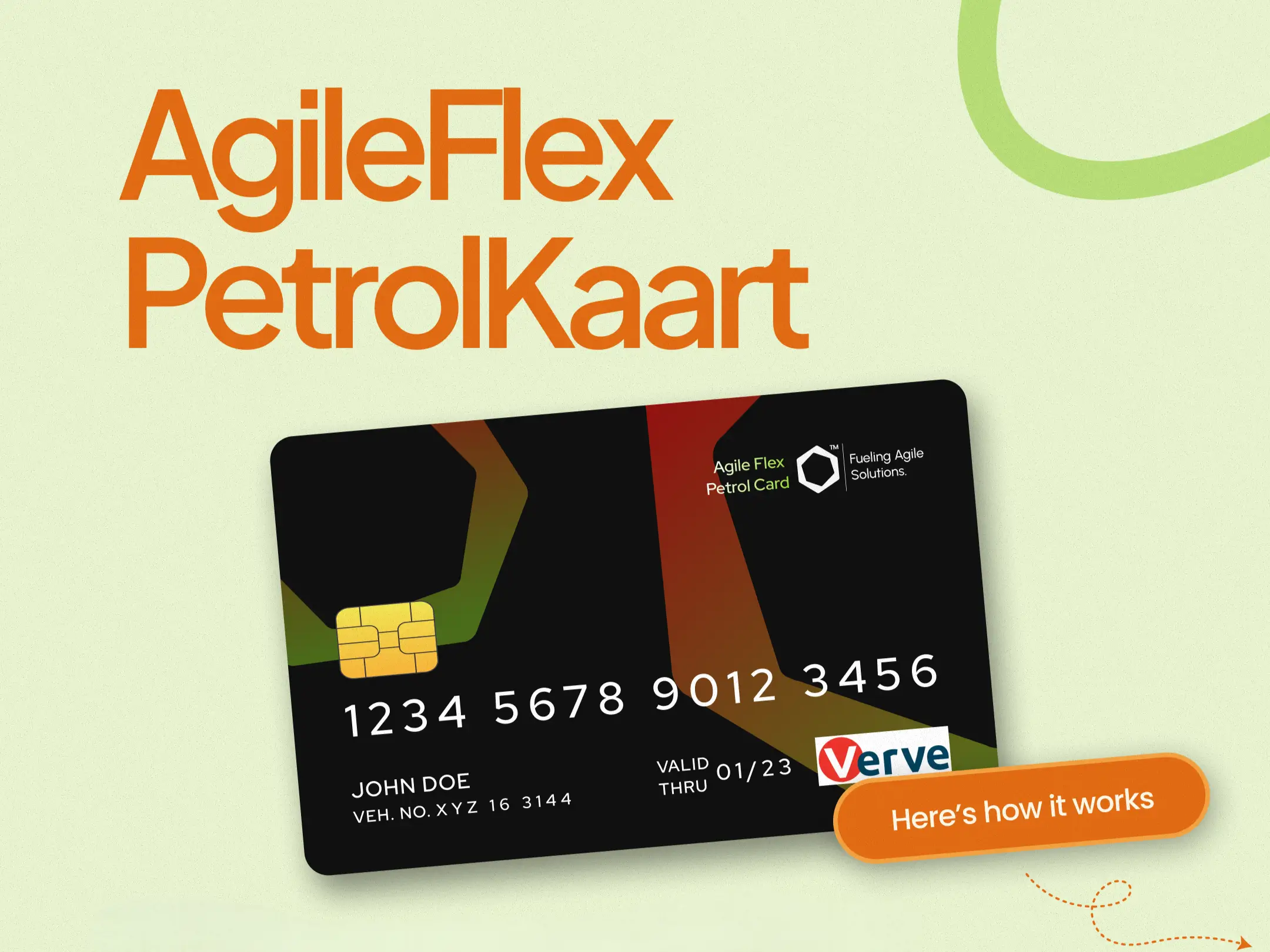
If your transport team wants to replace cash fuel allowances with real-time pump logs and live GPS visibility, you can review card options on the AgileFlex PetrolKaart solutions page.
What Are the Top 5 KPIs Every Fleet Coordinator Must Track?
| KPI Metric | How to Measure It | What High Risk Looks Like |
| Fuel Expenditure Variance | Compare expected litres for route distance against actual litres billed | Persistent gaps usually signal siphoning, idling, or worn injectors |
| Asset Utilization Rate | Divide active operating days or hours by total available fleet time | Low scores mean excess pool vehicles sit idle while incurring insurance |
| Unplanned Downtime | Track operating hours lost to unexpected breakdowns per vehicle | Rising downtime points to skipped preventive maintenance checks |
| Driver Compliance Score | Combine speeding alerts, harsh braking, and document check results | Low scores raise accident risk, tire wear, and checkpoint fines |
| Total Cost of Ownership | Sum fixed and variable vehicle costs minus resale value, divided by km | Rising Naira per km shows when an aging truck costs more than it earns |
What Skills and Qualifications Does a Fleet Manager Need?
- Data and Spreadsheet Literacy. Comfort with telematics dashboards, fuel card exports, and basic cost-per-kilometre accounting.
- Preventive Maintenance Knowledge. Enough mechanical grounding to question inflated workshop quotes and schedule servicing by mileage rather than guesswork.
- Vendor and Station Negotiation. Ability to vet reliable mechanics, verify spare-part quality, and manage multi-station fuel networks.
- Professional Logistics Credentials. In Nigeria, certifications and membership through the Chartered Institute of Logistics and Transport (CILT) Nigeria demonstrate formal grounding in transport operations, supply chain safety, and regulatory standards.
Frequently Asked Questions
What is the hardest part of a fleet manager’s job in Nigeria?
Managing fuel price swings and unverified cash expenses across interstate routes is typically the toughest challenge.
Without digital pump logs and preventive servicing schedules, a single unreported mechanical fault or fuel leak on a long corridor can wipe out a trip’s profit margin.
How many vehicles does a business need before hiring a dedicated fleet manager?
Most businesses appoint a dedicated fleet manager once they operate 10 to 15 commercial vehicles.
Below that size, an operations lead usually handles dispatch and fuel cards part-time. Above 15 vehicles, daily maintenance tracking, compliance renewals, and pump audits require full-time ownership to prevent cost leaks.
More control at the pump.More confidence on the road.
Put your fuel budget back in your hands. Set spending limits, track every litre,and keep your drivers moving with one smarter fuel card.
Spend on your terms
Set limits that suit your fleet.
Know where every litre goes
See fuel usage in real time.
Keep your fleet moving
Access over 2,400 stations.
Conclusion
Keeping wheels turning on Nigerian roads only builds profit when every litre bought, kilometre covered, and workshop check stays visible.
A strong fleet manager replaces end-of-month guesswork with daily habits: servicing vehicles before parts fail, auditing fuel variance per trip, and holding drivers to clear safety standards.
In case you are stepping into the role or hiring someone to oversee a growing yard, start by tracking your five core KPIs consistently.
Pairing disciplined preventive maintenance with cashless pump logs and live GPS visibility gives your transport operation the control needed to protect margins on every route.