Fleet Management Duties: Daily to Monthly Routine.
Fueling Agile Nigeria ·
Running a commercial fleet in Nigeria takes far more than handing keys to drivers and approving fuel money at the gate. Without strict operational routines, unverified fuel advances, delayed servicing, and roadside fines quickly wipe out delivery margins.
Fleet management duties are the daily, weekly, and monthly operational, financial, and regulatory tasks required to keep commercial vehicles safe, roadworthy, and cost-efficient.
Regardless of your fleet size, this guide breaks down, the seven core responsibilities every Nigerian fleet operation must cover, provides a time-based execution checklist, and shows how automation removes manual admin bottlenecks.
More control at the pump.More confidence on the road.
Put your fuel budget back in your hands. Set spending limits, track every litre,and keep your drivers moving with one smarter fuel card.
Spend on your terms
Set limits that suit your fleet.
Know where every litre goes
See fuel usage in real time.
Keep your fleet moving
Access over 2,400 stations.
Core Fleet Management Duties by Operational Function
Running commercial vehicles across Nigerian roads requires balancing vehicle uptime, driver safety, and strict cost control. These six operational functions cover the core responsibilities every transport team must execute consistently.
1. Pre-Dispatch Inspection and Load Verification
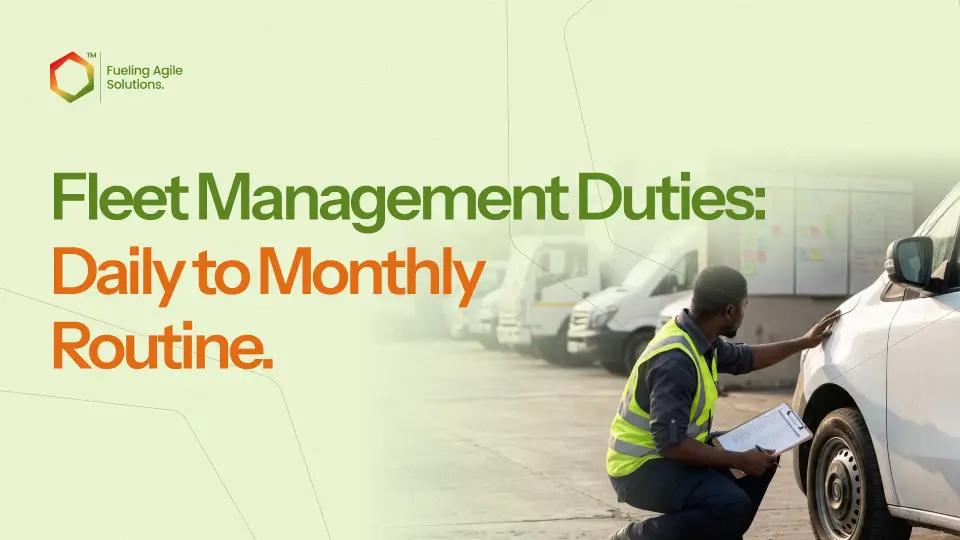
Preventing roadside breakdowns starts before a vehicle leaves the yard. Fleet supervisors must enforce documented walkaround checks covering tire tread and pressure, brake responsiveness, engine oil and coolant levels, headlights, wipers, and load balance.
Industry standards such as the FMCSA Driver Vehicle Inspection Report framework show how structured pre-trip and post-trip defect logs catch worn parts early before they fail mid-transit.
Supervisors also verify waybills and cargo manifests at the gate so drivers never leave with mismatched or overloaded freight.
2. Fuel Authorization and Pump Reconciliation
Fuel is the fastest-leaking expense in any commercial transport operation. Relying on lump-sum cash advances or un-monitored transfers leaves finance teams guessing how much fuel actually entered the tank.
Core duties include setting trip-specific fuel budgets, recording opening and closing odometer readings, and reconciling liters bought against kilometers covered.
Replacing cash allowances with prepaid cashless fleet fuel cards like AgileFlex PetrolKaart automates this task, locking spending strictly to fuel across 2,400+ stations nationwide and logging exact pump liters and odometer entries automatically.
3. Scheduled Servicing and Workshop Oversight
Waiting until an engine overheats or a clutch burns out on an interstate highway turns a routine service bill into a major financial hit.
Fleet teams must track odometer mileage and engine hours to schedule oil changes, filter swaps, brake pad replacements, and wheel alignment ahead of failure.
Just as importantly, supervisors must vet external mechanics, demand itemized job cards before approving repairs, inspect old replaced parts, and monitor workshop turnaround times so trucks do not sit idle for weeks awaiting minor components.
4. Dispatch, Routing, and Turnaround Control
Profitable fleets match the right vehicle capacity to every delivery order rather than sending half-empty heavy trucks on short local runs.
Coordinators plan departure windows around urban traffic bottlenecks, monitor active trips through fuel monitoring and GPS tracking, and flag unauthorized route deviations immediately.
5. Driver Vetting, Fatigue Control, and Road Safety
A vehicle is only as safe and economical as the person behind the wheel. Fleet duties include verifying commercial driver licenses, conducting practical road tests before hiring, enforcing mandatory rest breaks on long-haul routes, and reviewing speeding or harsh-braking reports.
According to World Health Organization road safety data, over 90% of global road traffic fatalities occur in low- and middle-income countries, underscoring why strict driver vetting, speed discipline, and safety coaching protect lives, cargo, and corporate insurance premiums.
6. Statutory Clearances and Regulatory Audit Readiness
One expired document can get a loaded truck impounded at a checkpoint, delaying customer deliveries and triggering heavy release penalties.
Supervisors must maintain an active renewal tracker with 60-day advance alerts for vehicle licenses, roadworthiness certificates, Goods-in-Transit and motor insurance, hackney permits, and interstate haulage permits.
Commercial operators must also verify compliance with FRSC mandatory speed limiter regulations and maintain driver and vehicle safety records required under the FRSC Road Transport Safety Standardization Scheme (RTSSS).
Who Owns Which Duty? Splitting Operations vs. Finance
One of the biggest mistakes growing Nigerian businesses make is letting a single person request fuel cash, choose the mechanic, and approve receipts. Without clear separation of duties, internal collusion and inflated bills go unnoticed.
Whether you have a dedicated coordinator—as outlined in our breakdown of who handles modern fleet manager roles or split tasks across existing staff, divide responsibilities cleanly:
| Operational Area | Driver Responsibility | Fleet / Operations Supervisor | Finance / Accounts Team |
| Fuel Spend | Present fuel card at pump; enter accurate odometer reading | Set per-vehicle litre/Naira caps; flag abnormal consumption | Fund fuel wallets; audit pump logs against trip distance |
| Maintenance | Report dashboard warning lights and handling issues daily | Schedule service intervals; inspect workshop job cards | Verify vendor quotes; pay approved repair invoices directly |
| Dispatch & Routes | Follow approved routes and rest schedules | Assign vehicles to payloads; monitor live GPS movement | Track revenue and operating cost per route |
| Compliance | Carry valid driver license and vehicle document folder | Track 60-day expiry alerts; coordinate physical inspections | Process renewal payments ahead of expiration deadlines |
Daily, Weekly, and Monthly Fleet Operations Checklist
When tasks are tied to a fixed calendar, nothing slips through the cracks during busy delivery weeks. Use this cadence as a working standard operating procedure:
- Daily (Before Dispatch): Confirm driver sobriety and license validity, complete 5-minute tire/fluid/brake walkaround, verify fuel card balance, and match cargo waybills to vehicle capacity.
- Daily (Post-Trip): Log closing odometer readings, review pump transaction timestamps, record driver defect notes, and confirm all vehicles are parked inside approved yards.
- Weekly: Audit fuel efficiency (kilometers per liter) across every vehicle, review speeding and idling exceptions with drivers, and follow up on open workshop repairs.
- Monthly: Compile cost-per-kilometre reports for management, review 60-day statutory document expirations, and audit spare-parts inventory and mechanic billing rates.
Together, these routines form the operational backbone of a wider fleet management system that keeps costs predictable as your vehicle count grows.
Frequently Asked Questions
How should fleet management duties adjust during Nigeria’s rainy season?
Supervisors should tighten pre-trip inspections around wiper blades, windshield defoggers, brake linings, and minimum tire tread depth.
Dispatchers also need to factor heavy rain delays into delivery ETAs, verify tarpaulin or container waterproofing before loading, and reroute drivers away from flood-prone expressway sections.
What records must a Nigerian fleet supervisor keep on file for an FRSC RTSSS safety inspection?
Inspectors typically review a centralized safety register containing verified copies of all driver licenses, periodic driver medical and vision test certificates, individual vehicle maintenance histories, speed limiter calibration certificates, pre-trip inspection logs, and an incident or accident investigation register.
What is the best way to manage fleet duties across multiple branches in different states?
Standardize your pre-trip checklist and workshop approval thresholds across every branch rather than letting each depot invent its own rules.
Use a centralized cashless fuel card platform with branch-level budgets so head office sees every refill nationwide in real time without waiting for regional spreadsheets.
How does a fleet supervisor hand over duties smoothly when going on leave?
Keep all active workflows in shared cloud records rather than personal notebooks or WhatsApp chats.
Before leave begins, update the master document renewal tracker, list every vehicle currently in a workshop with mechanic contact details, and ensure backup supervisors have live dashboard access to approve fuel top-ups and dispatch schedules.
More control at the pump.More confidence on the road.
Put your fuel budget back in your hands. Set spending limits, track every litre,and keep your drivers moving with one smarter fuel card.
Spend on your terms
Set limits that suit your fleet.
Know where every litre goes
See fuel usage in real time.
Keep your fleet moving
Access over 2,400 stations.
Conclusion
Well-executed fleet management duties are what separate transport operations that steadily build profit from those constantly explaining where the money went.
Every pre-trip check completed, every service booked on schedule, and every litre reconciled at the pump protects your working capital.
Start by locking down your daily fuel and inspection routines, enforce clear accountability between operations and finance, and let digital tools handle the repetitive tracking so your team can focus on keeping goods moving safely.