Fleet Management for Nigerian Roads: 6 Core Pillars.
Fueling Agile Nigeria ·
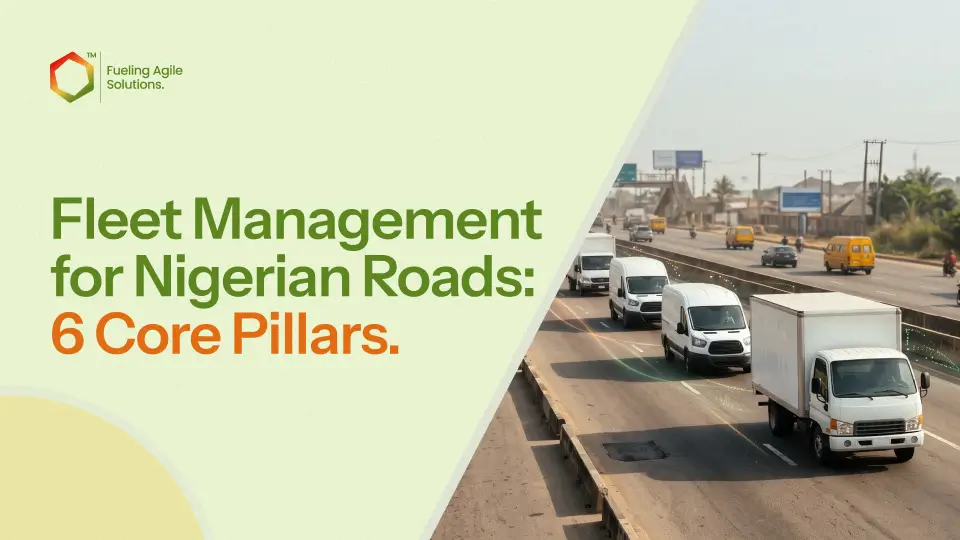
Buying commercial trucks, delivery vans, or company pool cars is a one-time capital decision, keeping those vehicles profitable on Nigerian roads is a daily financial battle.
Fleet management is the centralized coordination of commercial vehicles, drivers, fuel spend, preventive maintenance, routing, and regulatory compliance to cut operating costs and maximize vehicle up time. For businesses running logistics, distribution, or field operations, it turns blind fleet expenses into audit able numbers.
Rising diesel costs, tighter customer delivery windows, and stricter safety enforcement are pushing more Nigerian operators away from guesswork.
Industry analysis tracking Nigeria’s fleet management market shows steady expansion toward 2032 as companies prioritize cost visibility over manual paper logs.
This guide breaks down how modern fleet management works, the six operational pillars that protect your margins, the KPIs finance teams should track, and how to pick the right system for Nigerian roads.
More control at the pump.More confidence on the road.
Put your fuel budget back in your hands. Set spending limits, track every litre,and keep your drivers moving with one smarter fuel card.
Spend on your terms
Set limits that suit your fleet.
Know where every litre goes
See fuel usage in real time.
Keep your fleet moving
Access over 2,400 stations.
The 6 Core Pillars of Modern Fleet Management
1. Fuel Management and Expense Control
Fuel is the single largest variable operating expense for most Nigerian fleets, yet it is often the least controlled. Giving drivers lump-sum cash advances or monitored debit cards invites inflated pump receipts, personal fuel purchases, and siphoning.
According to the NBS Automotive Gas Oil (Diesel) Price Watch, retail diesel prices can vary by more than ₦1,100 per liter between states in the same month, making static cash fuel allowances impossible to audit fairly.
Replacing cash with prepaid cashless fleet fuel cards locks spending strictly to fuel, enforces daily or weekly Naira caps, and records exact liters dispensed alongside odometer readings at the pump.
2. Preventive Maintenance and Downtime Reduction
Waiting until a delivery truck breaks down on an interstate corridor is the most expensive way to maintain a fleet. Emergency roadside repairs trigger towing charges, overtime mechanic bills, and missed customer service-level agreements.
Research published in U.S. Department of Energy O&M maintenance benchmarks estimates that structured preventive maintenance delivers 12% to 18% cost savings compared to reactive, run-to-failure repairs.
Automated service reminders triggered by odometer mileage or engine hours catch worn brake pads, belts, and filters before they cause catastrophic failure.
3. Real-Time Telematics and Route Optimization
Modern telematics units stream live vehicle location, ignition status, route deviations, and geofence alerts to a central dispatch screen.
Dispatchers spot unauthorized detours immediately, re-route drivers around gridlock, and provide customers with accurate arrival windows instead of rough phone estimates.
4. Driver Behavior and Safety Monitoring
How a driver handles a vehicle directly dictates fuel burn and accident frequency. Harsh braking, rapid acceleration, over-speeding, and prolonged engine idling silently drain budgets.
Field telematics research on vehicle idling shows that a stationary commercial engine left idling wastes up to 3.5 liters of fuel per hour while accelerating internal engine wear.
Tracking driver scorecards allows supervisors to coach high-risk habits early and reward safe, fuel-efficient driving.
5. Regulatory Compliance and Document Renewals
Impounded vehicles and roadside fines disrupt supply chains overnight. A structured fleet system centralizes expiration alerts for vehicle licenses, insurance certificates, road worthiness papers, hackney permits, and driver credentials.
For commercial operators, it also supports audit readiness under the FRSC Road Transport Safety Standardization Scheme (RTSSS), including mandatory speed limiter verification and driver safety logs.
6. Fleet Lifecycle and Asset Utilization
Every commercial vehicle reaches a tipping point where rising repair bills and downtime outweigh its remaining resale value.
Tracking 12 to 24 months of operating data reveals underutilized pool vehicles that can be reassigned, while pinpointing the exact mileage window to retire and replace aging trucks before depreciation and maintenance collide.
Manual Spreadsheets vs. Automated Fleet Management Systems
Many growing businesses start by tracking fuel and repairs in Excel spreadsheets backed by WhatsApp photos of thermal receipts. That approach breaks down once a fleet passes five to ten active vehicles.
| Operational Area | Cash + Paper Receipts / Excel | Integrated Fleet & Fuel System |
| Fuel Reconciliation | End-of-month manual matching with missing receipts | Real-time transaction sync per vehicle and driver |
| Theft & Siphoning Detection | Discovered weeks later or never | Flagged immediately via odometer and litre-volume gaps |
| Maintenance Scheduling | Reactive repairs after roadside breakdowns | Automated alerts triggered by mileage or calendar intervals |
| Audit Trail | Faded thermal slips vulnerable to alterations | Exportable Level III fuel transaction visibility with pump timestamps |
| Cost-Per-Vehicle Visibility | Blurry company-wide fuel totals | Exact Naira-per-kilometre Total Cost of Ownership (TCO) |
5 Key Fleet KPIs Every Operations and Finance Team Should Track
You cannot cut costs you do not measure. Focus your monthly review around five operational and financial metrics:
- Total Cost of Ownership (TCO) per Kilometer: Add fixed costs (financing, insurance, licensing) and variable costs (fuel, tires, maintenance, tolls), subtract projected resale value, and divide by total kilometers driven. This tells you what every kilometer actually costs your business.
- Fuel Expenditure Variance: Compare expected fuel consumption (based on route distance and vehicle manufacturer benchmark) against actual liters purchased.
Persistent gaps point directly to siphoning, underinflated tires, or mechanical issues—making it worth diagnosing sudden fuel consumption spikes before replacing parts blindly. - Fleet Utilization Rate: Divide active operating hours (or days) by total available hours, then multiply by 100. Low utilization signals excess vehicles sitting idle in the yard while still incurring insurance and depreciation costs.
- Unplanned Downtime Rate: Divide hours lost to unexpected breakdowns by total scheduled operating hours. Anything above 5% signals gaps in preventive servicing.
- Preventive vs. Reactive Maintenance Ratio: Track the percentage of workshop hours spent on scheduled servicing versus emergency repairs. High-performing fleets keep at least 80% of maintenance planned in advance.
How to Choose a Fleet Management Solution in Nigeria
Selecting software or hardware built solely for European highways often leads to frustration on Nigerian routes. Apply five practical checks before signing a vendor contract:
- Plug Your Biggest Financial Leak First: If fuel theft, inflated pump receipts, and cash-advance delays are draining cash every week, deploy cashless fuel controls immediately rather than waiting months for complex hardware installations.
- Verify Nationwide Station Acceptance: Confirm that fuel cards work across independent and major filling stations in all 36 states so interstate trucks are never stranded.
- Demand Granular Spending Rules: Look for per-vehicle daily, weekly, and monthly limits, fuel-grade locks (separating AGO diesel from PMS petrol), and instant card blocking if a card goes missing.
- Prioritize Finance-Ready Exports: Ensure accounting teams can download clean, itemized reports in minutes without manual data entry.
- Start With a 30-Day Pilot: Test the system on 5 to 15 high-mileage vehicles first. Measure actual fuel variance and admin hours saved before rolling out across your entire fleet.
Frequently Asked Questions
Can a small business with only 3 to 5 vehicles benefit from fleet management, or is it only for large haulage fleets?
Small fleets often feel fuel and repair leaks fastest because they lack dedicated audit teams.
Even three to five commercial vans running daily routes can lose hundreds of thousands of Naira monthly to unverified cash allowances and missed servicing.
How do cashless fleet fuel cards work in rural corridors or stations with weak mobile network reception?
Reliable fleet card networks operate across broad multi-brand station footprints—such as AgileFlex’s 2,400+ nationwide partner stations and rely on established POS authorization rails rather than driver smartphone apps.
Drivers present the physical card at the pump just like a debit card, avoiding cash-handling risks along interstate routes.
More control at the pump.More confidence on the road.
Put your fuel budget back in your hands. Set spending limits, track every litre,and keep your drivers moving with one smarter fuel card.
Spend on your terms
Set limits that suit your fleet.
Know where every litre goes
See fuel usage in real time.
Keep your fleet moving
Access over 2,400 stations.
Conclusion
There is an old saying that small leaks sink big ships and commercial transport proves it every day. A few unverified liters of diesel here, an overdue service interval there, and monitored idling on interstate routes can quietly drain millions from your bottom line.
Effective fleet management plugs those leaks before they erode your margins. When you replace lump-sum cash allowances with capped, audit able fuel cards, schedule maintenance ahead of roadside breakdowns, and track your real cost per kilometer, your vehicles stop draining working capital and start driving predictable growth.